logo astiki melissa
0,00 € 0

Basket

No products in the basket.

Urban beekeeping

Urban beekeeping is the practice of keeping bee colonies within the city. It is a widespread practice in many capitals and cities around the world and although many cities had bans in the past, the restrictions are now being lifted as the environmental necessity of having bees within the city is recognized.

BEEKEEPING IN URBAN AREAS

Keeping bee colonies in the city has many similarities, but also important differences with traditional beekeeping. The main differences are:

  • the number of hives a site can support. In the city we have limited green spaces and plenty of buildings and streets. As a consequence, an urban apiary is quite smaller compared to one in the countryside.

  • man-made environment and legislation create significant restrictions on where beehives can be placed in a city.

  • the climate in cities is quite different, with minimum and maximum temperatures being significantly higher than their neighboring places.

  • the flora of the city is characterized by a wide variety of species, some of which are not native and can only be found in cities
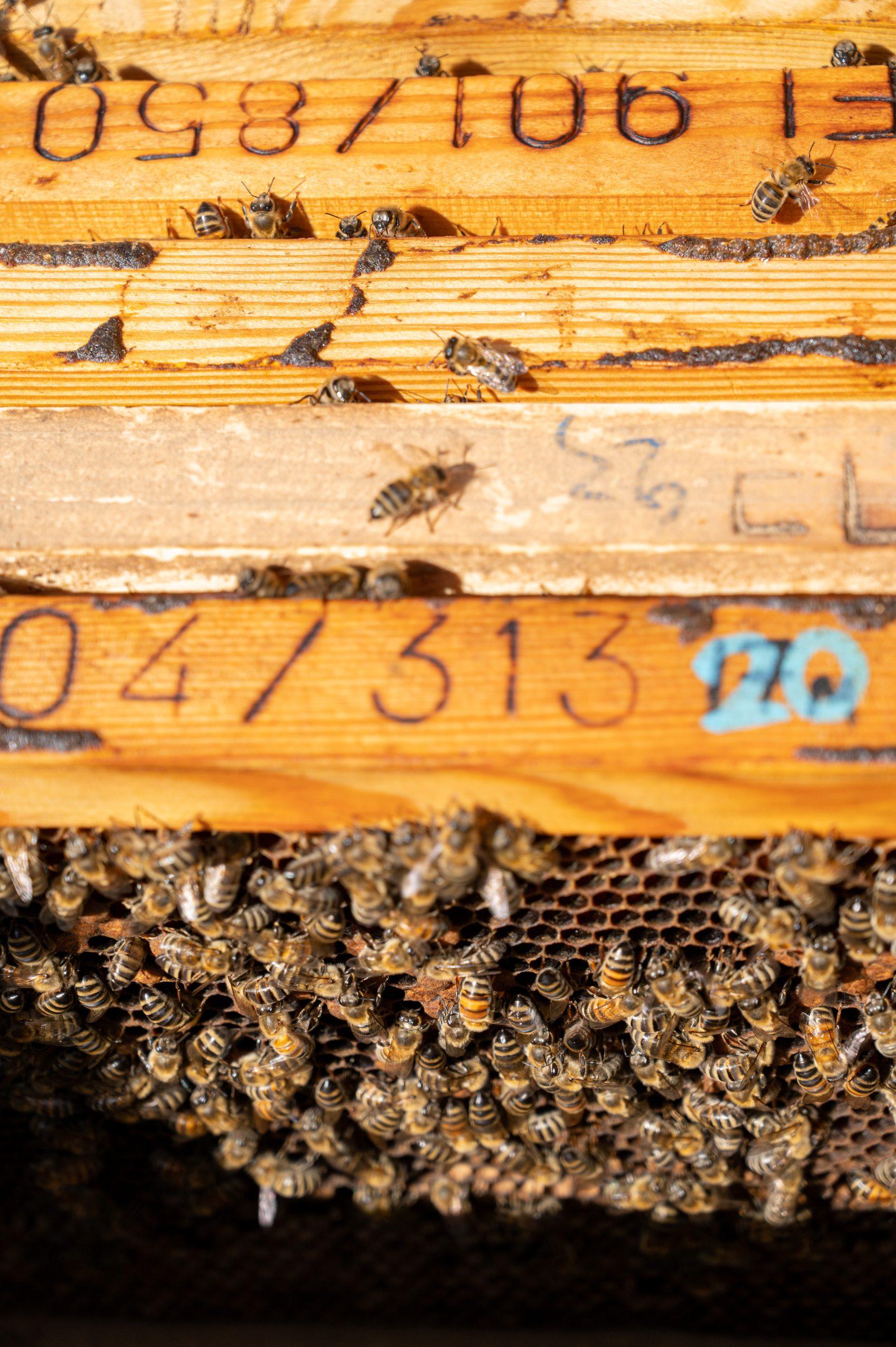
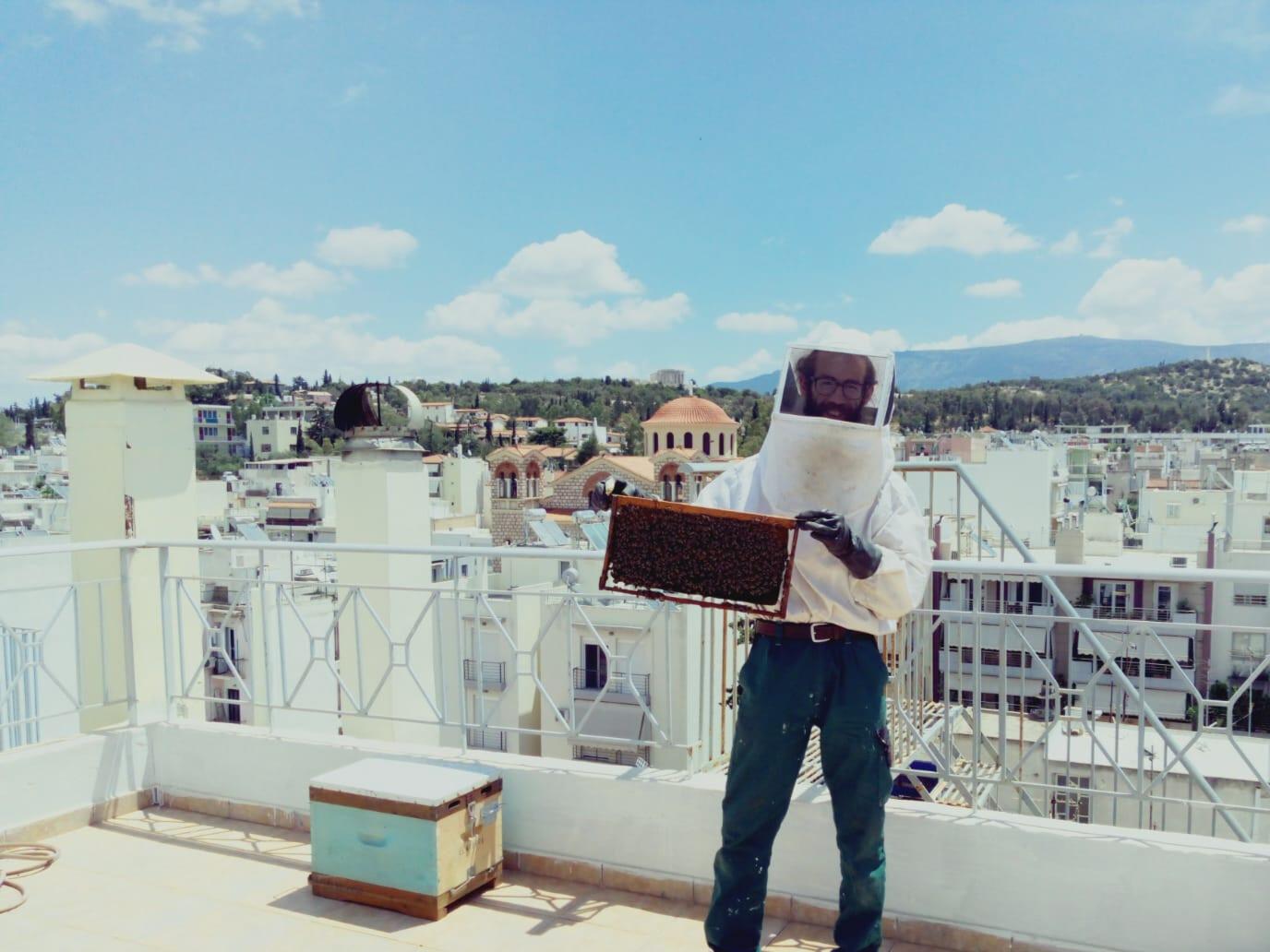
If the first two factors are taken seriously into consideration, the next two may be responsible for a common finding among urban beekeepers around the world: Urban beehives do much better than those in the countryside. They grow faster, are calmer and collect more honey.
A key problem that exists however, is that many hobby beekeepers do not know bee diseases that well and how to apply a proper treatment program for them, or they mistakenly believe that not applying treatments leads to more natural and healthy bees. Unfortunately, diseases among bees spread rapidly from one colony to another. If we consider that bees fly up to 5 km from their hive in search of food, then even two hives that are 10 km apart are considered as neighboring hives!

Εμείς ασκούμε την αστική μελισσοκομία για περιβαλλοντικούς και κοινωνικούς σκοπούς, και για λόγους μελέτης της προσαρμογής των μελισσών στο αστικό περιβάλλον.

Το μέλι έρχεται ως φυσικό επακόλουθο της εργασίας των μελισσών και της δικής μας και δεν το καταληστεύουμε. Πιστεύουμε πως το να τρέφονται οι μέλισσές μας με φυσικό μέλι που παράγουν οι ίδιες είναι ο καλύτερος σύμμαχος για την υγεία και την πρόοδό τους, που είναι προτεραιότητα για εμάς. Αν κάποια χρονιά και εποχή υπάρχει σε περίσσεια, το τρυγάμε και το μοιραζόμαστε μαζί σας. Από την άνοιξη του 2024 θα μπορείτε να βρείτε και να δοκιμάσετε το αστικό μας μέλι στο κατάστημά μας!

adopt
a beehive

Find out how you can help our urban beekeeping project by adopting bees or volunteering!

FAQ

Isn’t urban honey contaminated?

μέλι_2
Every batch of honey we collect from Athens goes through a lab test that determines the presence of any pollutants.So far all tests have shown that urban honey from Athens is a 100% pure and natural product, which contains neither pesticides nor atmospheric pollution and is absolutely safe for human consumption. Possible reasons are that:

a) the flowers have a complex structure that protects the precious nectar

b) exposure of nectar to the air in an area with bees does not last long, as bees work from early morning until sunset

c) bees have a very sensitive sense of smell and avoid flowers that are polluted

d) heavy metals contained in atmospheric pollutants dissolve in fat, but not in water-based honey

e) air pollution is likely to be filtered by both the honeybees’ and the plants’ processes.

Is it safe to have beehives in the city?

Bees are often confused with wasps, which can become aggressive and are attracted to our food.

Bees are peaceful animals, always on their way to the next flower for pollen and nectar, and only sting when they feel that they or their hive are threatened. A peaceful approach to bees, where we know their needs and behavior, is important for our coexistence. Through our actions, we want to acquaint the city's residents with the bee, an insect necessary for the environment and harmless to humans.

However, among the many factors the behavior of a hive depends on, is also the knowledge and care of an experienced beekeeper. Under no circumstances do we recommend that someone who is not well versed in the art of beekeeping try to keep bees in the city.

Aren't urban honeybees competing with wild bees and other pollinating insects?

Honeybees have always existed in Athens, as evidenced by well-known toponyms (e.g. Kypseli, Melissia). Our approach is to develop urban biodiversity in a way that benefits all insect pollinators. We are not a for-profit business and for us the main goal is to raise public awareness of the problems faced by pollinators. We maintain small apiaries within the urban fabric, at reasonable distances from each other for a few months of the year, so that there is plenty of food both for our honeybees and the rest of the insects. Honey for us comes as a reward to a community that grows richer year after year. We believe that bees in the city present to us a unique opportunity to create a system that is not so much in harmony "with nature", but in harmony "as" nature.

Why do we need bees in cities?

αστικό μελίσσι
We may have more cement and asphalt in the cities than in the countryside, but here there are also more of us. And where many of us are, great things can happen, starting with a change in consciousness. Although in Greece we have an amazing entomological biodiversity, no actions have yet been taken to protect it. Our goal is to familiarize ourselves with the bee and other pollinating insects in cities, which are essential for environmental balance and harmless to humans. By using the honeybee as a symbolic vehicle and means of raising awareness, we hope to start taking action to protect all pollinating insects in urban and rural areas.